Print may be a flat medium, but that has not stopped magazine publishers from trying to add dimension to their pages. For at least a decade, they have been experimenting with bar codes and icons that could take readers to Web sites, trying to add a bit of Internetlike interactivity to their pages.
Skip to next paragraph
Black-and-white codes on a page from the March issue of Esquire can link Web-enabled phones to styling advice for items in the magazine.
But the average consumer did not own a bar-code reader — until now. With the sudden ubiquity of smartphones, which have apps that can read bar codes, and cameraphones, which can easily snap pictures of icons, magazines like Esquire and InStyle are adding interactive graphics to their articles, while Entertainment Weekly and Star are including them in ads.
Meanwhile, publishers using text-messaging programs to try to enliven their pages are packing information into the messages and using reader responses to calibrate their coverage.
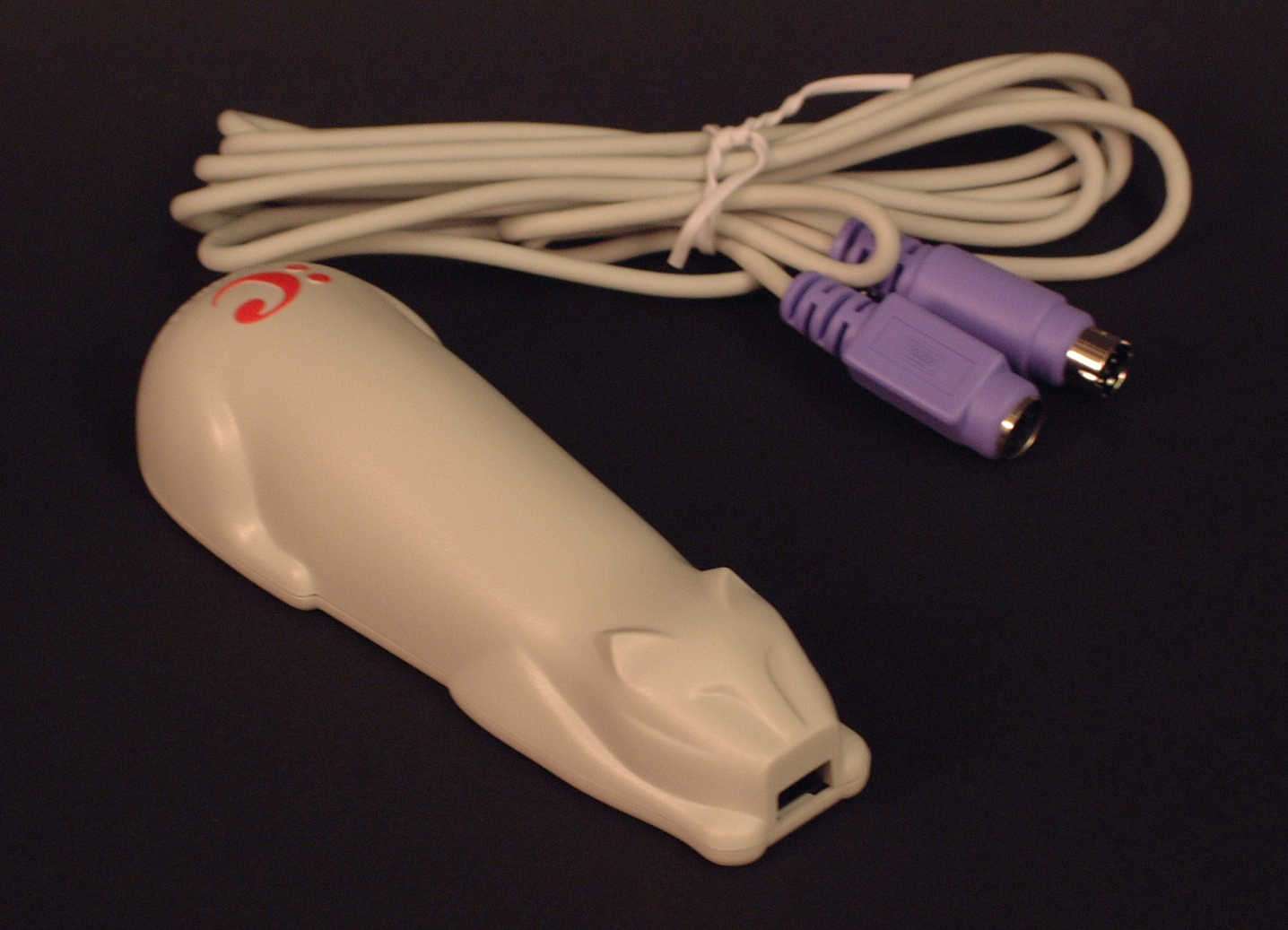
The idea is not new. Back in 2000, a company called Digital:Convergence introduced a product called the :CueCat. The premise was advanced, but simple. Pages could be printed with bar codes, which readers could scan, and then be connected to specific Internet sites. That would help them find the shirt being advertised, or specs on the Ford truck they liked.
But the technology was clunky. Publications using the :CueCat, including Forbes and Wired, had to mail a hand-held scanner and a CD-Rom with :CueCat software to their subscribers. The subscribers had to install the software, then attach the device to their computer and wave it over the printed bar codes. It wasn’t portable or easy, and, in most cases, it was more trouble than doing a search or typing in a lengthy Web address. That’s a major reason the :CueCat disappeared.
Today, though, consumers don’t need a :CueCat — they have a cellphone.
“This idea is basically the same — it’s just everyone has a scanner in their pocket,” said Jonathan B. Bulkeley, the chief executive of Scanbuy, which is working on a mobile program with Esquire, among other publications.
Of course, 10 years later, some concerns remain. Publishers can print bar codes to their hearts’ content, but getting consumers to understand and use them is another matter. While bar codes are integrated into everyday life in countries like Japan — people get nutrition information from bar codes on McDonald’s hamburger wrappers — American consumers have never quite picked up the habit. And now that search engines are fast and accurate, advertisers and publishers will most likely need to offer something spectacular, not just a plain Web page, to get people to bother scanning anything.
In its March issue, Esquire will print Scanbuy codes in a spread on “The Esquire Collection” — “the 30 items a man would need to get through life,” said David Granger, editor in chief. Printed near each item will be a small code that looks like a group of black and white squares. Readers scan the code into an Internet-enabled phone, and the code takes them to a mobile menu that provides Esquire’s styling advice for the item and information on where to buy it.
An application called ScanLife, widely available online as a free download, turns a phone into a bar-code reader. Versions exist for the iPhone and BlackBerry as well as Android-based handsets, and the app comes preloaded on many Sprint phones in the United States. ScanLife can also read many standard bar codes on many phones, so it can perform price comparisons, for example.
“We kept hearing about different technologies that enabled people to close the gap between the inspiration of seeing something in a magazine and then going to do something about it,” Mr. Granger said.
Though Esquire will be giving readers information about stores where they can buy items, Mr. Granger said, for now the magazine would not be seeking a percentage of sales resulting from use of the technology.
“I’m not sure we have a smooth way of getting a cut yet,” he said, “but it would be nice if this takes off.” Mr. Granger added, however, that Esquire would need to carefully consider questions about editorial integrity raised by such technology.
Mr. Bulkeley said that Esquire’s choice to introduce Scanbuy with its editorial pages, rather than with ads, made sense. “I think advertisers will see that and say, ‘Hey, can we do that too?’ But it is important for editorial to lead, to show advertisers they are supporting it, because there is an educational component necessary,” he said.
Levi’s Dockers khaki pants are among the items featured in the Esquire spread. Jennifer Sey, vice president for global marketing for Dockers, said the company was interested to see how readers respond, adding that running ads containing a code “is a really interesting idea — it’s certainly something that we would consider.”
Rather than running a printed code on its pages, InStyle is using photographs of clothes as the key that links print and online.
In its March issue, InStyle will run a “clothes we love” article, and will direct readers to hold up the pages featuring each of six items, like a miniskirt and a safari jacket, to their Web cameras. The browser will then open related three-dimensional videos.
Next Page »
- 1
- 2
Recommend More Articles in Business » A version of this article appeared in print on January 11, 2010, on page B1 of the New York edition.
Monday, January 11, 2010
This should extend to ALL mass media. From the NYT. Smartphones Helping Magazines Become Interactive


Monday, January 04, 2010
KYC. Know Your Customer. From the NYT. Unboxed - A Data Explosion Is Remaking Retailing
MOST people think of the grand challenges in computing as big science projects, like simulating nuclear explosions or protein folding. But with the holiday shopping season just ended, consider another: retail marketing.
Retailing is emerging as a real-world incubator for testing how computer firepower and smart software can be applied to social science — in this case, how variables like household economics and human behavior affect shopping.
To be sure, major retailers like Wal-Mart Stores have long been sifting through in-store sales and demographic information to aim goods at different stores and to tightly manage supplies.
But what is changing, experts say, is the rapid surge in the amount and types of digital data that retailers can now tap, and the improved computing tools to try to make sense of it. The data explosion spans internal sources including point-of-sale and shipment-tracking information, as well as census data and syndicated services. Companies also track online visitors to Web commerce sites, members of social networks like Facebook and browsers using smartphones.
The better tools, they say, are ever cheaper and faster computers and so-called business intelligence or analytic software for finding useful information and patterns in that data.
Retailers are increasingly mining vast troves of digital information to improve the decisions they make about pricing, shelf-stocking and product offerings. “This huge and growing ecosystem of data is an asset that some retailers are really beginning to exploit for competitive advantage,” said Thomas H. Davenport, a professor of information technology and management at Babson College. “It brings more science into the business. Relying on gut feel is yesterday’s strategy in retailing.”
Mountains of data and whiz-bang technology are no cure for tight-fisted shoppers, of course. And this was a challenging holiday season for most retailers. Even computing enthusiasts acknowledge that the technology is far better at fine-tuning decisions on pricing, product assortments and shipments than the basic merchandising judgments about what goods to make and buy from suppliers.
“In the world of retail merchandising, there will always be a mix of art and science,” said Lori J. Schafer, a retail expert at SAS Institute, which specializes in analytic software. “But the more you can get into customers’ heads, the better off you are.”
That is certainly the strategy at Wet Seal, a 500-store specialty retailer of clothing, mainly for teenage girls. Wet Seal is a so-called fast-fashion retailer, meaning that trends in its market change quickly and the company needs little time — as few as three weeks — to put its clothes, shoes and accessories into stores after its buyers make their decisions. Staying in tune with the shifting tastes among young women is crucial, said Edmond S. Thomas, the C.E.O.
Its stores account for more than 80 percent of Wet Seal’s sales, but the company’s presence on the Web is growing, using its site as a source of market insights as well as revenue. Last year, Wet Seal introduced a Web feature called Outfitter, which allows users to put together their own outfits online.
The virtual outfits are posted, and users can browse through them, comment and exchange recommendations. So far, more than 300,000 user-generated outfits have been designed, generating millions of page views.
“We can get a read on where our customer is headed faster than ever before,” Mr. Thomas said. The user designs, he said, helped the company see early signs of a recent trend toward more informal outfits — dressy tops, but casual bottoms, usually jeans.
In October, Wet Seal created its own iPhone application, called iRunway. With it, a customer in a store can tap in an item’s ticket number — bar code recognition comes later this year — and see how it has been used in outfits that other customers have created online.
The user-generated product selections and recommendations, combined with mobile phone access, build a community of customers that should increase sales, Mr. Thomas predicts. “We’re at the very initial stages, but that will be the wave of the future in fashion retailing,” he said.
At 1-800-Flowers.com, Christopher G. McCann, the president, agrees that “social mobile” retailing will be a major venue for sales and marketing. The company also has apps for the iPhone, the BlackBerry and phones using Android software.
Most of the company’s more than $700 million in sales of flowers and gift baskets are online, so it can quickly change prices and offerings on its Web site — often hourly. The company has used analytics software for years to tweak its online store and marketing. In the last six months, Mr. McCann said, 1-800-Flowers.com has improved the conversion rate — browsers to buyers — on its Web site by 20 percent, with more finely targeted pages and e-mail promotions.
The company also uses analytics software to optimize operations — including marketing, shipping, distribution and manufacturing.
The technology, Mr. McCann says, helped cut costs by $50 million last year.
Nihad Aytaman, a senior technology manager at Elie Tahari, a private $500 million-a-year maker of designer clothes for women and men, is an enthusiastic proponent of analytics technology. The information housed in the company’s data warehouse has grown fivefold in the last three years, and is constantly mined for sales trends and to orchestrate supplies and shipping.
“It takes all this data and makes it visible and meaningful, so you can make sense of it and act on it,” said Mr. Aytaman, an engineer with an M.B.A. “But you’re not creating something that wasn’t there. Designers and merchandisers have to go with their gut if they are making something new.
“No computer can mimic human intuition,” he said.
Next Article in Business (18 of 43) » A version of this article appeared in print on January 3, 2010, on page BU3 of the New York edition.


Saturday, January 02, 2010
Thanks for the tip to this article, @guykawasaki. From the WSJ. New Graduates Create Their Own Jobs
By TODDI GUTNER
Andrew Levine knew he wouldn't find a job in investment banking when he graduated with an M.B.A. from the University of Miami in 2008. Wall Street was in the midst of a financial collapse. So instead the 24-year-old focused his efforts on launching a start-up. "I figured that starting my own company was the best use of my time while I waited for the market to thaw," says Mr. Levine.
Faced with an unemployment rate of 16% for 20- to 24-year-olds, a growing number of recent college and grad-school graduates are launching their own companies, according to anecdotal evidence from colleges, universities and entrepreneurship programs around the U.S.
For his part, Mr. Levine built upon a business plan for a niche social-networking company he had created for an entrepreneurship class the prior year. He showed the plan to the father of a college friend who was an angel investor and got $40,000 in seed money in exchange for an equity stake in the business.
Armed with start-up cash, Mr. Levine created audimated.com, an online social-networking site for musicians and their followers. It serves as a forum for the independent music community—both fans and musicians—to discover and promote new music. The site is in beta testing now with a launch expected in January.
This push toward entrepreneurship among young people is likely to continue as employers plan to hire 7% fewer graduates from the class of 2010 than they hired from the class of 2009, which saw a nearly 22% drop in hiring from the class before, according to a recent report from National Association of Colleges and Employers. The annual average percentage of all job seekers starting their own businesses increased to 9% through the third quarter of 2009, according to Challenger, Gray and Christmas, a global outplacement consultancy. That's compared with 5% at the end of 2008.
"Given the state of the economy, and the state of the job market, many young people are getting the push they needed to become entrepreneurs," says Bo Fishback, vice president of entrepreneurship at the Kauffman Foundation, a nonprofit that promotes entrepreneurs. "It's a lot easier to decide to launch your own company when there aren't a lot of jobs out there."
School career-service officials say it makes sense for new grads to go the start-up route. Young adults are often well-suited to put up with the long hours start-ups demand. They don't have the responsibilities and financial obligations that burden older adults. What's more, these graduates grew up on the latest technology and easily adapt to technological improvements.
Of course, young entrepreneurs also are likely to face their own hurdles. "Having the skill set to become an entrepreneur is different than any thing you learn in school," says Susan Amat, the executive director of the Launch Pad at the University of Miami, an entrepreneurship-support program based out of the campus career center.
To that end, it's important for young entrepreneurs to seek the necessary help to get started. For current students or recent graduates, it might be easiest to reach out for assistance on campus. Many schools have campus incubators or offer start-up competitions, like Babson College's annual Entrepreneurship Forum, which offers cash, consulting, legal and Web services to winning business plans. Other schools have business incubators that help students—and sometimes outsiders—hone business ideas and, in some cases, support them financially or with other resources.
Mr. Levine turned to the Launch Pad before he sought out an investor to him sharpen his business plan and investor presentation The program also gave him guidance for creating a revenue strategy and trademarking the site's logo.
A boot-camp training program or organized group for aspiring business owners also can help. The Kauffman Foundation's FastTrac, a 10-week boot camp offered throughout the country, trains aspiring entrepreneurs. And Y Combinator of Mountain View, Calif., and TechStars in Boulder, Colo., offer cash and mentoring to young founders.
The biggest challenge, though, might be convincing investors and customers that a young 20-something has the experience needed to deliver on a plan. One way to clear that hurdle is with strong advisers. "Recruit the right advisers who will vouch for you, who are experts in your field, will let you use their name and are beyond refute," says Mr. Fishback.
Brooks Morgan, a 2009 graduate of University of Kansas, did just that. Mr. Morgan wanted to work in venture capital, but jobs were scarce, so he found work on the other side—at a start-up. As vice president of business development for Infegy, a start-up enterprise social-media analytics company, Mr. Morgan's first order of business was to attract advisers. His last two years in college, he had worked part-time with Richard Caruso, a venture capitalist , who introduced the three Infegy principals to people who could help them land deals with corporations.
"Because we were passionate about what we were doing, [our advisers] were excited to be with and help the younger generation," says Mr. Morgan. Infegy was launched earlier this year and has 20 employees and several Fortune 500 clients.
Printed in The Wall Street Journal, page D5
Solid Selection! From TechCrunch. 2010: My Fifth Annual List Of The Tech Products I Love And Use Every Day
It’s time for my annual list of technology products that I love and use every day. This is the (wow) fifth year I’ve done this. Here are my previous lists: 2009, 2008, 2007 and 2006. The scope of the list has changed over time. In 2006 it was just about websites. Now the list includes other web services, some desktop software and even a few gadgets.
These aren’t necessarily newly launched products (see Daniel Raffel’s post yesterday for a solid list of great new products). This is a simple list of the tech products that are an integral part of my day – work or play. Some have withstood the test of time and I just can’t live without. Others are newcomers that have captured my imagination.
I use most of them every day, or nearly every day, and I would not be as productive or happy without all of them. There are now 24 products on the list.
Just three of these products have been on the list all five years: TechMeme, Skype and Wordpress. As I said last year, TechMeme continues to be the news aggregator I check multiple times per day to keep up on tech news (although Google News is becoming more important over time). Skype is the instant messaging and VoIP platform that I use most often at work and with friends. And Wordpress software powers all of our blogs.
I’ve added 13 new products to last year’s list: Android, Apple Magic Mouse, Dropbox, Evernote, Foursquare/Loopt/Gowalla, Google Docs, Google Voice, Kodak Zi8, MOG, Skitch and Spotify.
I’ve removed seven products from the 2009 list: 1-800-Free-411, Digg, Friendfeed, Google Reader, iPhone, MySpace Music and Zoho.
There are lot of products that I use daily that aren’t on the list for various reasons. My iMac and MacBook Pro and Droid phone, for example, aren’t on the list specifically even though all three products are exceptional. I don’t really have a browser preference, although I suspect Chrome will be on the list next year. And there are lots of websites and services, like Posterous and Amie Street, that I use regularly but just didn’t make my arbitrary cut. We also use Bit.ly extensively on the site for URL shortening, and EventBrite and Amiando for event ticketing.
Here’s my 2010 list of tech products that I love and use every day:
Android
I gave up the iPhone this year and switched to Android mobile phones. First the MyTouch, then the Droid. I’ll soon be upgrading again. What I like best about Android is the deep integration with Google Voice, which I talk about below. These two products go hand in hand.
Website: android.com Location: Palo Alto, California, United States Acquired: August, 2005 by Google In July 2005, Google acquired Android, a small startup company based in Palo Alto, CA. Android’s co-founders who went to work at Google included… Learn More
Information provided by CrunchBaseAnimoto
I first put Animoto on the list last year. The service makes beautiful slide shows of photos, and this year they added videos (here’s one I made). Their iPhone application continues to impress. This company is now profitable and my guess is someone like Apple will acquire them in the next year.
Website: animoto.com Location: New York, New York, United States Founded: August, 2006 Funding: $5M Animoto generates custom, professional-looking slideshows from user-uploaded music and photos. Their “patent-pending Cinematic Artificial Intelligence technology and high-end motion design” drives the web app. They say the Cinematic A.I. analyzes… Learn More
Information provided by CrunchBaseApple Magic Mouse
The Apple Magic Mouse is the best computer pointing device ever made. It functions as a normal mouse but also has multitouch on top. Once you use it you’ll never be happy with an old mouse or touchpad again.
Website: apple.com Location: Cupertino, California, United States Founded: April 1, 1976 IPO: 1980 Started by Steve Jobs, Steve Wozniak, and Ronald Wayne, Apple has expanded from computer maker to include consumer electronics over the last 30 years, officially changing their name from… Learn More
Information provided by CrunchBaseDelicious
Delicious, the social bookmarking workhorse, has been on my list every year except 2007. It’s not perfect but it’s better than anything else out there.
Website: delicious.com Location: Sunnyvale, California, United States Founded: November 1, 2003 Acquired: December 1, 2005 by Yahoo! Delicious is a social bookmarking website – the primary use of Delicious is to store your bookmarks online, which allows you to access the same bookmarks from any computer and add bookmarks from anywhere, too. On Delicious, you can use tags to… Learn More
Information provided by CrunchBaseDropbox
Dropbox is a new addition to the list this year. It’s just dead simple file syncing across all your computers, mobile devices and the cloud. It’s also a great way to privately share big files. Dropbox is now one of my must-have productivity tools. I just wish Google offered something similar so that I could have an integrated dashboard for my Google Docs files and Dropbox stuff.
Website: dropbox.com Location: San Francisco, California, United States Funding: $7.2M Dropbox is a software product that makes it easy to securely share files with other people, sync them across multiple computers, access them from anywhere, and keep them safe.
Dropbox was founded by Drew Houston and Arash Ferdowsi in 2007, and… Learn More
Information provided by CrunchBaseEvernote
Evernote is also a new addition this year. Like Dropbox it is an amazing productivity tool that lets you capture, organize, and find information across multiple platforms. You can take notes, clip webpages, snap photos using their mobile phones, create to-dos, and record audio. All data is synchronized with the Evernote web service and made available to clients on Windows, Mac, Web, and mobile devices. Additionally, the Evernote web service performs image recognition on all incoming notes, making printed or handwritten text found within images searchable.
Website: evernote.com Location: Mountain View, California, United States Funding: $25.5M Evernote allows users to capture, organize, and find information across multiple platforms. Users can take notes, clip webpages, snap photos using their mobile phones, create to-dos, and record audio. All data is synchronized with the Evernote web… Learn More
Information provided by CrunchBaseThis is the third year in a row that Facebook has been on the list. Facebook has won the social wars, and even the biggest companies are now surrendering to them. Facebook Connect is turning into the defacto online identity solution for tens of millions of people.
Website: facebook.com Location: Palo Alto, California, United States Founded: February 1, 2004 Funding: $716M Facebook is the world’s largest social network, with over 350 million users.
Facebook was founded by Mark Zuckerberg in February 2004, initially as an exclusive network for Harvard… Learn More
Information provided by CrunchBaseFoursquare, Loopt and Gowalla
These three startups (Foursquare, Loopt and Gowalla), among others, are battling to control mobile social networking. They all have variations of the check-in model, where users are encouraged to note where they are for their friends to see. Foursquare has all the early adopter momentum, But Loopt has millions of users and Gowalla has a compelling product. All three are likely to win.
Website: foursquare.com Founded: 2009 Funding: $1.35M Foursquare is a location based social network that incorporates gaming elements. Learn More
Website: loopt.com Location: Mountain View, California, United States Founded: January 1, 2005 Funding: $13.3M Loopt is a mobile social mapping application. Using cell phones and mobile devices, it displays the locations of a user’s friends along with their presence status (available, away, etc) visually on maps or on lists. Based on GPS and related data,… Learn More
Website: gowalla.com Location: Austin, Texas, United States Founded: August 28, 2007 Funding: $10.3M Gowalla, also known as Alamofire, creates games and game-like experiences for the social web.
Gowalla is a location-based social networking game launched as a public beta in March 2009. Gowalla uses a large catalog of virtual goods to encourage… Learn More
Information provided by CrunchBaseGmail
This is the fourth year in a row for Gmail. It’s the best webmail out there, and I appreciate the free imap support and forwarding. Enough said.
Company: Website: gmail.com Launch Date: April 1, 2004 Gmail, also known as Google Mail, is a free email service with innovative features like “conversation view” email threads, search-oriented interface and plenty of free storage (almost 7GB). Gmail opened in… Learn More
Information provided by CrunchBaseGoogle Docs
This is a new addition for me this year. I never bothered installing Office on my new laptop, and find that Google Docs has all the functionality I need, plus easy sharing with others and storage in the cloud. I may never install Office again. I previously had Zoho on the list, a competitor, and removed it only because I find that centralizing as many services as possible at Google makes things easier for me as a user.
Company: Website: docs.google.com Launch Date: October, 2006 Google Docs is Google’s free web-based word processor, spreadsheet, and presentation application. The online app allows users to easily share documents and collaboratively work on them in real-time.
On March 31st, 2008, the Google Docs team… Learn More
Information provided by CrunchBaseGoogle Voice
This has been a big year for Google Voice, previously called Grand Central. The mobile apps let Google Voice completely take over Android phones. I’ve ported my mobile number to Google Voice and now any time someone calls that number I can direct it to any phone I like based on where I am, who’s calling and when. It has changed my life, and I will never use a mobile phone that doesn’t have deep integration with the service.
Company: Website: google.com/googlevoice/about.html Google Voice is a free Internet service that uses VoIP technology to link phone numbers together. GrandCentral was relaunched as Google Voice on March 11, 2009 with new features, including voicemail transcriptions and SMS managing.
Users of… Learn More
Information provided by CrunchBaseHulu
This is the second year in a row for Hulu. I’d love for them to add a paid model and let me watch HBO shows or pay per view new release movies. And I wish they could secure rights to archived libraries of shows, but even as it currently exists, Hulu is a great entertainment service.
Website: https://www.hulu.com Location: Los Angeles, California, United States Founded: March 1, 2007 Funding: $100M Hulu is an online video provider held by NBC Universal, News Corporation, and, as of April 2009, Disney. The site focuses exclusively on… Learn More
Information provided by CrunchBaseKodak Zi8
This digital video camera beats the pants off the current Flip models. The best feature is the ability to add a microphone. Flip doesn’t have this, and the audio quality is often terrible. The Zi8 is a full generation ahead.
Location: Rochester, New York, United States With the slogan “you press the button, we do the rest,” George Eastman put the first simple camera into the hands of a world of consumers in 1888. In so doing, he made a cumbersome and complicated process easy to use and accessible to nearly… Learn More
Information provided by CrunchBaseMOG, Pandora and Spotify
MOG and Spotify are new this year. Pandora has been on every year except 2008, and with hindsight I should have added them that year, too. These are three streaming music services that are awesome. MOG, which is $5/month, is the best music experience on the Internet. Spotify, a desktop streaming service that hasn’t launched in the U.S. yet, lacks the radio and social features of MOG but is currently free. And we hear it will launch on a limited basis in the U.S. very shortly. Pandora is still a very cool place to just sign in and listen to music that I love quickly and easily.
Website: mog.com Location: Berkeley, California, United States Founded: June 1, 2005 Funding: $12M MOG is a place for people to publish thoughts about music, as well as a place to share the names of the songs they play on their computers (using a downloadable program called MOG-O-MATIC that runs in the background and automatically detects songs no… Learn More
Website: Pandora.com Location: Oakland, California, United States Founded: January 1, 2000 Funding: $56.3M Born out of a love for music with 99% of its employees at one time or another working as musicians, Pandora is truly a company wholly dedicated to music. With a database of more than 600 thousand songs, each digitally annotated with musical… Learn More
Website: spotify.com Location: Luxembourg, Luxembourg Founded: December 26, 2009 Funding: €71.6M Spotify has created a lightweight software application that users will simply download and then log onto their service enabling on demand streaming of music. Learn More
Information provided by CrunchBaseScribd and Docstoc
Scribd and Docstoc, two services that let you upload office files like PDFs and Word documents and then embed them on sites, are very useful to bloggers like us. When we have a document that we want to share with readers, we use one of these services and embed it into the post. Both services were also on the list last year.
Website: docstoc.com Location: Santa Monica , California, United States Founded: August 1, 2007 Funding: $4M Docstoc is the premier online community to find and share professional documents. Docstoc provides the platform for users and businesses to upload and share their documents with all the world, and serves as a vast repository of documents in variety… Learn More
Website: scribd.com Location: San Francisco, California, United States Founded: March, 2007 Funding: $12.8M Scribd is a social publishing site where people upload and share creative writing and various documents, regardless of file format. The company claims more than 55 million unique users to the network each month and well-known users such as Barack… Learn More
Information provided by CrunchBaseSkitch
I’ve been using Skitch for years. It’s Mac software that makes basic image manipulation a breeze – sort of a very light version of Photoshop. For 90% of our images, Skitch works just fine. It’s easy to add text, resize and crop images, etc. And it automatically uploads them to the website for you, too.


Thursday, December 31, 2009
Must think HAPPY and SLIM! "Happines...and obesity can all spread through social networks."
 (Getty Images)By Anne Harding
TUESDAY, December 1, 2009 (Health.com) — Happiness, laughter, and smiles are often described as infectious. It turns out you can catch loneliness too.
Having just one lonely friend, relative, or neighbor increases your risk of feeling lonely by 52%, according to a new study led by John Cacioppo, PhD, a psychologist at the University of Chicago. Loneliness, in fact, spreads through networks of friends, families, and neighbors more quickly and easily than a sense of social connectedness does, the study says.
It’s the latest research from a team who has discovered that your friends and family influence you more than you may think. In a series of recent studies, Cacioppo’s coauthors, Nicholas A. Christakis, MD, PhD, a professor of medical sociology at Harvard Medical School, and James H. Fowler, PhD, a political scientist at the University of California, San Diego, have shown that happiness, smoking, and obesity can all spread through social networks.
But can you really “catch” loneliness? The researchers suggest that a lonely person’s body language, facial expressions, and tone of voice may actually make the people around him or her feel lonely too.
What’s more, loneliness appears to be a vicious cycle, according to the study, published this week in the Journal of Personality and Social Psychology. Lonely people tend to lose friends over time, which makes them feel more lonely and isolated; it pushes them to the edge of the social web.
Plus, loneliness spreads—far. The effects were seen not only in the lonely person’s close friends, but his friends’ friends and his friends’ friends’ friends.
People in the study felt lonely 48 days a year, on average. A person surrounded by lonely connections would spend six hours more a week feeling lonely than someone with no direct links, the study found.
Loneliness was more contagious among friends than family. The size of a person’s family didn’t influence the likelihood of being lonely, and, surprisingly, a lonely spouse had less of an impact than a lonely friend.
Distance was also a factor. Lonely friends who lived more than a mile away had less of an effect on the loneliness of others, and their ability to make other people lonely declined the farther away they were. A similar pattern was found among neighbors; a lonely person caused his next-door neighbors to feel lonelier, but not his neighbors farther down the block.
The good news is that while loneliness may be contagious, it isn’t without a cure. The spread of loneliness can be stopped, and lonely people aren’t doomed to a sad, solitary life, says Cacioppo, who likens loneliness to physical pain—a warning sign that alerts us to problems that need to be addressed.
“In the case of loneliness, we’re taking care of our social body,” he says. When social connectedness “starts to slip away, loneliness is a…signal that notifies us so we can act on it.”
Loneliness is different from social isolation, although there is some overlap between the two. The level of a person’s social isolation (or connectedness) is typically measured using outward characteristics such as marital status, number of friends, and frequency of social activities. Loneliness, on the other hand, is a subjective measure that researchers define as perceived social isolation—how isolated a person feels.
The health effects of loneliness can be serious. Research has shown that people who feel lonely are at greater risk for mental and physical ills, from depression and alcoholism to obesity, heart disease, and weakened immunity.
Next page: Women more vulnerable than men


Great news for those of us who can't get a Kindle! from Gadget Lab. Ray Kurzweil Reinvents the Book, Again
Updated 12/29 with additional details
Ray Kurzweil, a prolific inventor who is best known for his prediction that machine intelligence will surpass that of humans around 2045, still has a few things to offer carbon-based life forms. Kurzweil has introduced new e-reader software, called Blio, that approaches e-reading from a completely different angle than the current E Ink-based devices like the Amazon Kindle, Barnes & Noble Nook and Sony Reader.
Blio is not a device. Rather, it is a “platform” that could run on any device, but would be most obviously at home on a tablet. The software is free and available currently for PCs, iPod Touch and iPhone.
“Everyone who has seen it acknowledges that it is head and shoulders above others,” says Kurzweil. “We have high-quality graphics and animated features. Other e-readers are very primitive.”
Blio is set to debut at the Consumer Electronics Show in Las Vegas next week.
E-readers have become a hot consumer electronics product. About 5 million e-reader devices are expected to be sold by the end of the year. Meanwhile, electronic books for the Kindle outsold physical books on Amazon for the first time this Christmas, said Amazon, one of the largest online book retailers.
Kurzweil — who is better known for his 2005 book The Singularity Is Near — has worked extensively in areas such as optical character recognition, speech recognition and text-to-speech synthesis. His company Kurzweil Technologies has a joint venture with the National Federation of the Blind called knfb Reading Technology to create reading products for people with disabilities. knfb Reading is the company that has created Blio.
One of Blio’s major advantages over current e-book readers is that the software offers a full color experience. E Ink, which is the black-and-white display used currently in almost all e-readers, works best for text, and even then most e-books still look ugly, thanks to design limitations in the readers.
Blio actually lays out the “pages” as they would be seen on paper, with typography and illustrations copied across. It also supports video and animation. In some ways, it’s reminiscent of the interactive magazine applications (also meant for upcoming tablet devices) shown off by the likes of Time Warner, Popular Science publisher Bonnier and Wired’s parent company Conde Nast.
Add to that some nifty features such as text-to-speech and the ability to synchronize things (like bookmarks, highlights and the page you last read) across multiple devices, and it makes for an interesting e-reader.
“We can take a PDF and an audio book and merge the two to get a combination such that you can hear the audio book and see the words highlighted on the PDF at the same time,” says Peter Chapman, an executive at Kurzweil Technologies.
For publishers, says Kurzweil the advantage is that Blio preserves the original book’s format, including typsetting, layout, fonts and pagination.
Though it sounds nifty, Blio is up against some stiff competition. Kurzweil and his team are betting against the trend of dedicated e-reader devices such as Kindle, Nook and Sony Reader.
“People don’t want an extra piece of hardware,” says Kurzweil. “They want to take one device and do everything with it and they want color screens.”
Instead, Kurzweil is betting that tablets that are scheduled to be launched next year — including the much speculated Apple tablet — will be used by consumers instead for reading digital books. Blio could fit well on those tablets.
Blio will also go up against existing e-reader software such as Stanza for the desktop. Amazon acquired Stanza earlier this year, and its Kindle for PC and Kindle for iPhone apps also sync with the Kindle device. Barnes and Noble also plans to offer desktop and smartphone-based e-reader software that will work with its Nook. But Kurzweil says they can’t support multimedia and text-to-speech like Blio does.
Blio creators are also working with major book publishers to port their e-books from the Adobe PDF format to Blio for free. They are trying to partner with Google to make its massive library of free book titles available in Blio.
On its own, Blio looks solid, but it signifies something much bigger: the end of the paper book. Right now, e-books are poor copies of paper books, with a single advantage: convenience. A book is just a container for text, not its natural home.
The upcoming rash of tablets could provide a better place for reading words than these old wads of paper, usurping print the way Gutenberg usurped hand-copied manuscripts.
A chart from Blio shows how the software compares to its rivals:
See Also:
- Futurist Ray Kurzweil Pulls Out All the Stops (and Pills) to Live
- Large-Screen Kindle Won’t Mean Squat if Apple Tablet Arrives …
- Barnes & Noble Unveils Kindle-Killing, Dual-Screen ‘Nook’ E-Reader
- Review: Amazon.com Kindle 2
- Review: Barnes & Noble Nook
- Why 2010 Will Be the Year of the Tablet
Photos: Blio/knfb Reading Technology


From Dave Kusek. Music Trend-o-Rama 2009 | Future Of Music
OK
Here are some good summaries of trends that apply to music. More to follow…
10 music-tech trends that will shape the next decade – from CNET
“With recording revenue plunging, bands must draw fans to their live shows in order to make a living. The common wisdom today dictates that musicians need a personal connection with their fans. They must blog, tweet, maintain their MySpace and Facebook profiles, and generally act like your next door neighbor who’s always pestering you to see his band. There’s a word for receiving “personal” messages from your favorite 100 bands–it’s called “spam.” Eventually, this cloud of self-promotional noise will dissipate, and will be replaced by old-fashioned word of mouth. Only acts that put on a great show–not just singing and playing songs, but entertaining in the old-fashioned sense of the word, with video and stagecraft and humor and spectacle–will cut through the noise. Bonus points for the first act that somehow integrates an audience-accessible game console into their act.”
The 20 key digital music trends in 2009 – from Music Ally
“There’s no doubt that consumers like streaming music when it’s done well, as illustrated by the success of Spotify and Pandora this year. And it seems equally certain that streaming has a significant role to play in the future of the music industry. That role, however, will be alongside other revenue streams, rather than being the downloads killer it’s sometimes painted as being by the media. However, as 2009 draws to a close, there is still huge debate around the economics of streaming music, with ad revenues nowhere close to paying for the licensing costs, and artists and labels still grousing about their royalty cheques while fearful about cannibalisation of music sales. ‘Freemium’ has replaced ‘ad-supported’ as the business model of choice; but even that has yet to prove itself as a truly sustainable option.”
MidemNet Chooses Top 15 Digital Music Startups – from Hypebot
“The 15 start-ups chosen by Music Ally and a jury of entrepreneurs cover a range of digital fields that offer opportunities for the music industry including live applications (Awdio, Songkick, Streamjam), digital licensing of sheet music and lyrics (DigiClef, TuneWiki), artist management (BandCentral), managing key data for artists (Band Metrics), digital distribution (Pops Worldwide), web radio (Radionomy), remixing (Aviary, GoMix and Tracksandfields), musical discovery (Thesixtyone), artistic financing (Kickstarter) and on-line advertising (Silence Media).”

How about launching one in 2010? Now, that's a thought! From the NYT. Internet Radio Stations Are the New Wave
Early fans of the iPhone bemoaned that, unlike many of its competitors, their favorite “do anything” device couldn’t do one obvious thing: play local radio stations.
Skip to next paragraph
Myine’s Ira radio connects to a home stereo or powered speakers, and offers 11,000 Internet stations.
Sanyo’s R227 model includes the ability to receive Internet stations, and FM ones as well.
Livio Radio allows listeners to create a radio station based on an artist or genre they like.
Logitech's Squeezebox devices let you play Internet radio and music stored on connected PCs.
They didn’t get it. FM tuners are passé. Why include tuner technology to play a few dozen stations when you can harness thousands of radio stations over the Internet?
Unlike standard broadcast radio, Internet radio stations can be heard virtually anywhere (copyright restrictions aside), as long as you have a device that can go on the Web; that can be a PC, a smartphone or a stand-alone receiver.
An Internet radio station may have started out life as a traditional local broadcast outlet, and then management decided that it would be great to let people hear it everywhere. Or an Internet radio station may be nothing more than one person in a basement uploading music or talk to the Web, hoping that someone out there will listen.
Literally thousands of genres of Internet radio exist, from oldies, classical and religious to ultraradical talk, from the right and left. The first trick is finding them, and the next is playing them. Fortunately, with a little information, both tasks are rather easy.
TUNE IN To find an Internet station of a particular genre, start with the basics: a Web search. Type in “60s,” “NPR” or “Catholic” and the words “Internet radio” and you’ll come up with a list and links to those channels.
Another useful source is streamingradioguide.com. The Web site lists more than 14,000 stations that can be searched by genre. While extensive, the list is not complete.
Internet radio hardware and smartphone apps that offer radio transmissions don’t typically accumulate station offerings themselves; rather, they use aggregators, companies that create a selection of channels. On the Web, you can access radio channels directly from those aggregators as well; they include Reciva.com, Radiotime.com, Vtuner.com, 1.fm and Freeradio.tv.
In addition, Apple’s iTunes software (Mac and PC) offers hundreds of Internet radio stations. To listen to them, click on “Radio” under “Library” in the left vertical column.
TURN ON A wide variety of stand-alone players are now available that allow consumers to listen to Internet radio without using a PC.
One compelling feature: many offer wireless connectivity — with a wireless router, you can place the player anywhere in the home within range of the signal, and use the player as you would with a normal radio.
Livio Radio’s wireless line includes its AARP, NPR and Pandora models. (Pandora’s music service allows listeners to “create” a radio station based on an artist or genre they like. Then, Pandora automatically plays other music that the service believes fits the same category.)
Each $200 unit features programming from its model name; however all are capable of playing any of the 16,000 Internet stations offered in the unit’s menus, from ’80s music to police scanner intercepts.
The models can be connected to an external stereo system, or the unit’s built-in speakers can be used.
Logitech’s Squeezebox line of Internet radio devices ($200 to $400) include, depending on model, a color screen, speakers and the ability to play both Internet radio and music stored on connected home PCs.
Models range from a tabletop unit to a boombox to the Squeezebox Duet. They are designed to send the Internet feed and your PC’s music collection to a home stereo system, and they come with their own remotes.
For about $120, Myine’s Ira Internet radio receiver connects to a home stereo or powered speakers, and offers 11,000 Internet stations. It incorporates a simple, two-color display and a remote.
Sanyo’s R227 model, $180 at Amazon.com, takes its styling cues from the KLH Model 8 radio of the 1950s, and includes not just the ability to receive Internet stations, but FM ones as well.
The unit features eight presets for both Internet and broadcast stations, and also functions as a music-playing clock radio.
Philips offers a number of wireless Internet radio models under its Streamium brand. The NP2900/37, about $300, includes a color screen, and is housed in a sleek, horizontal sound bar, with a stand reminiscent of an iMac’s.
With four speakers and 30 watts of power, this Streamium can also play music stored on a network-connected Mac or PC, and can display cover art. It also includes a month of Rhapsody, a subscription-based music service.
DROP IN (TO AN APP STORE) Hundreds of radio apps are available at Apple’s iPhone and iPod Touch app store, both free and fee-based.
AOL Radio (free) does what its name implies: it simply offers 200 Internet stations across 25 genres, plus 150 CBS radio stations, and includes not just music, but comedy and sports as well.
Crave real-life drama? Police Radio and Scanner 911 (both 99 cents), as well as Emergency Radio ($3) allow you to listen in to dozens of police, fire and emergency service broadcasts around the country.
For public radio fans, at least three apps will give you easy access to “All Things Considered” and other shows. Public Radio App ($3) allows listeners to pause and rewind 300 public radio shows, and bookmark them to return to listen later. The app also displays the Web page associated with the show, and can be set to play as a clock radio.
Other public radio apps are available at no charge, including Public Radio Player and PRI; the latter plays only shows from Public Radio International. In addition, many public radio stations have stand-alone apps for their program stream, including KPCC in Los Angeles, which is free, and New York’s WNYC, which costs 99 cents (for podcasts). Android users can get streaming Internet stations using apps like Streamitall and Last.fm, which are also available to iPhone users (Pandora also has an Android app). BlackBerry users have FlyCast and Slacker Radio (which are also iPhone-friendly) among their options.
So the next time you are browsing through your music library, wishing you had something new, do not lament the absence of AM or FM. Instead of a limited number of stations, a global selection is merely a click away.
Recommend Next Article in Technology (3 of 16) » A version of this article appeared in print on December 31, 2009, on page B7 of the New York edition.


Tuesday, December 29, 2009

No magic bullet here - and there shouldn't be: The Role of Microfinance - Nicholas D. Kristof Blog
Does the aid world exaggerate the benefits of microloans? How much do they help? Here’s a thoughtful, evidence-based analysis by three economics professors: Abhijit Vinayak Banerjee and Esther Duflo of M.I.T, and Dean Karlan of Yale. Their work is sometimes cited in critiques of microlending, so here’s their take:
Microcredit is undoubtedly the most visible innovation in anti-poverty policy in the last half century. In the three decades since Mohammed Yunus gave his first loan to a group of Bangladeshi women, the number of microcredit borrowers has crossed 150 millions. The majority had no access to credit from banks before microcredit came to them. When they needed to borrow, and most people do at some point or the other–to pay for an illness or a wedding, to grow a business or to fix their roof—they would go to money lenders and pay rates that have, justly or otherwise, accounted for the universal unpopularity of moneylenders (they can be over 20% per month). Now they borrow from MFIs at significantly lower (though often high by US standards) rates. At the same time MFIs have managed to find ways to be financially sustainable and to keep growing fast.
This is itself is a remarkable achievement. Very little works in many of these countries in terms of delivering to the poor; previous attempts to deliver credit, through state-run banks, for example, collapsed in the face of widespread corruption and defaults. Many microcredit institutions are led by dynamic entrepreneurs who have mastered quality service delivery on a large scale, a tough challenge in many developing countries.
However, many see microcredit as much more than a financial instrument: it has been suggested that it has the potential to be entirely transformative. There is an influential view that argues that, by putting more spending power in the hands of poor families, and, perhaps more importantly, in the hands of women, microcredit can expand investment in child health and education, empower women and reduce discrimination against them. There is even the suggestion that, by making people feel that their lives could be better and giving women independent access to capital, microcredit could fight the AIDS epidemic.There are, of course, others who are skeptical or even hostile. They see MFIs as old-fashioned money-lenders, preying on the inability of people to resist the temptation of a new loan. One self-described expert, in a recent letter to the Financial Times, goes as far as to suggest that microcredit leads to the “death of the local economy”.
Unfortunately, till very recently, there was little rigorous evidence on either side—is microcredit transformative or ruinous? However this is changing now, thanks to the courage and vision of a few leading MFIs (including Spandana in India, Al Amana in Morocco, First Macro Bank in the Philippines, Compartamos in Mexico) that have allowed researchers (each of us was involved in one or more of these) to evaluate rigorously the impact of their programs. We now have results from two (Spandana and First Macro Bank).
The two programs evaluated are very different. First Macro Bank provides loan to existing business owners, male or female, on an individual basis. Spandana uses the classic group-lending model and lends only to women.
Yet at one level the results are remarkably similar. The effect on businesses is not dramatic but some clearly benefit. In the Philippines, male-owned businesses increase profits, although female-owned businesses do not. In India, borrowers who already own a business buy assets for their business. One borrower out of eight starts a business they would not have started otherwise. Others buy durables for their homes.However, there is no evidence that microcredit has any effect on health, education, or women’s empowerment, at least right now, eighteen months after they got the loans. On the other hand, there is also no evidence that people are behaving irresponsibly. Indeed in India we have evidence of people giving up some of the little daily pleasures of life (like tea, snacks, betel leaves and tobacco), to pay for bigger things that they could not previously afford (carts for their business, televisions for their homes).
Many seem to think that this is not enough. However, as we see it, microcredit seems to have delivered exactly what a successful new financial product is supposed deliver—allowing people to make large purchases that they would not have been able to otherwise. The fact that some people expected much more from it (and perhaps they are right, may be it will just take longer), is perhaps inevitable given how eager the world is to find that one magic bullet that would finally “solve” poverty. But to actually blame microcredit for not promoting the immunization of children is no different from blaming immunization campaigns for not generating new businesses.

 Posts
Posts